
IQM to Deliver 54-Qubit Quantum Computer to Seoul Data Centre by 2027
 Rendy

IQM Quantum Computers has secured an order from South Korean company QAI for an IQM Radiance R3 54-qubit quantum computer, which is expected to be installed at QAI’s data centre in Seoul by the end of 2027.
The order covers an on-premises system and associated services. IQM says the installation will be its first quantum computer hosted at a private data centre in Asia. Delivery and installation remain planned milestones rather than completed work.
Planned access through QAI’s service
QAI operates data centre and cloud infrastructure that combines quantum computing resources with GPU-based computing. Once the system is operational, the company plans to make it available to customers through a Quantum-as-a-Service (QaaS) platform. The planned users include South Korean enterprises, research institutions and public organisations.
Under this model, customers would access the computer as a service rather than owning and operating the system themselves. QAI says its offering will combine GPU resources with the quantum computer, allowing organisations to use both types of computing infrastructure. The announcement does not specify access terms, pricing or when the service will open.
QAI expects the system to be used initially to explore applications in compute-intensive areas. The examples named in the announcement are drug discovery, next-generation materials such as batteries, financial portfolio optimisation, and scheduling for logistics and energy infrastructure. These are intended areas of investigation; the announcement does not report completed applications or performance results.
System design and integration
IQM describes Radiance as its most powerful on-premises quantum computer, designed to integrate with high-performance computing environments. The company says installing the system at a customer site can reduce latency for hybrid quantum-classical workloads, which combine quantum processing with conventional computing. No latency figures or benchmark results were provided for the Seoul deployment.
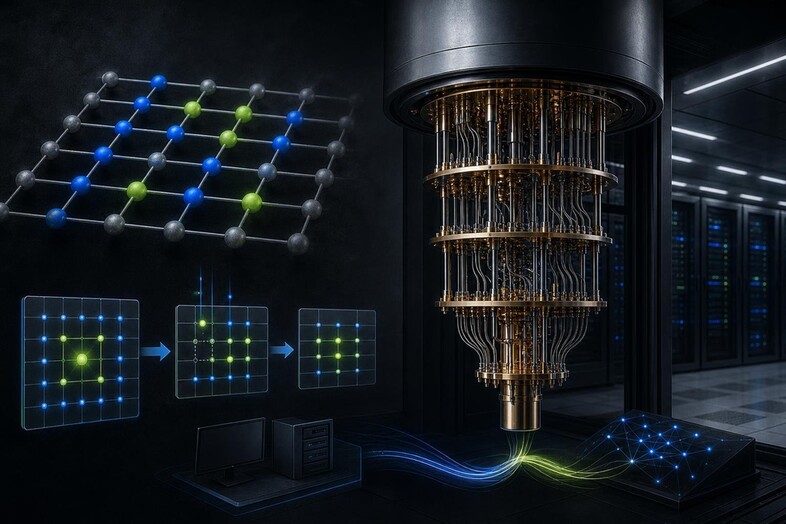
The 54-qubit system has tunable couplers between qubits and arranges them in a square lattice. IQM says this layout provides the highest connectivity available at this scale and natively supports surface-code error correction. Surface codes are a method of organising quantum information and measurements to detect and correct errors. The announcement describes support in the system’s layout; it does not claim that the deployed computer will operate a specified number of logical qubits or report a demonstrated error-correction result.
Customers will own and operate the on-premises system, according to IQM. The company also says customers will have pulse-level access and the option to upgrade chips and components as its technology develops. The source does not give technical specifications for those upgrades or a timetable for them.
Part of South Korea’s quantum plans
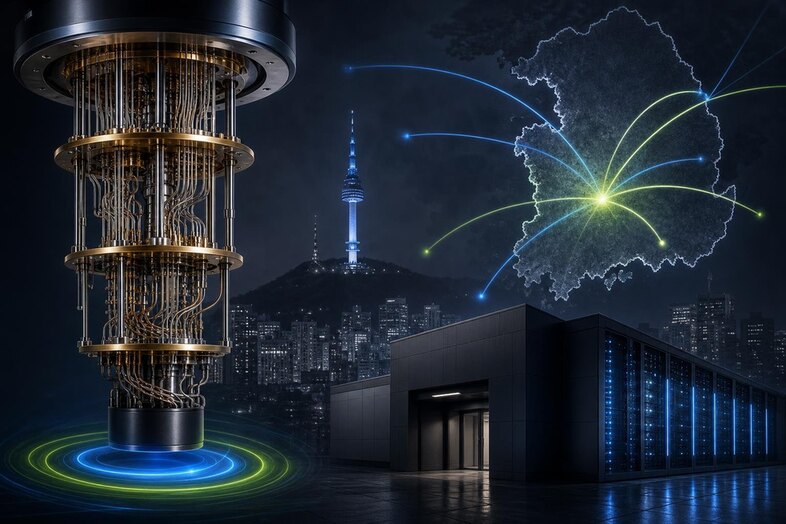
The order comes as South Korea names quantum technology among ten national strategic technology fields. Under the government’s Sixth Basic Plan for Science and Technology, the country plans to invest more than 200 trillion South Korean won, approximately EUR 135 billion, in research and development from 2026 to 2030. The stated figure covers research and development across the plan, not solely quantum technology.
In January 2026, the Ministry of Science and ICT set out the country’s first comprehensive plan for quantum science, technology and industry. Its targets include reaching the world’s highest utilisation rate of quantum computers by 2035, training 10,000 quantum professionals and fostering 2,000 quantum companies. These are government aims, not outcomes reported by the data centre project.
IQM already has a presence in South Korea. Its IQM Spark system at Chungbuk National University was the first commercial quantum computer installed through the Korean government’s official procurement process, according to the announcement. IQM opened a Seoul office in June 2025. The company also said it had delivered systems in South Korea, Taiwan and Japan.
For QAI, the next confirmed step is delivery and installation of the Radiance R3 at its Seoul data centre, which IQM expects by the end of 2027. QAI’s customer access through QaaS is planned for after the system becomes operational.