
AI-Assisted Security Disclosures Outpace Fixes for Infrastructure Vendors
 Rendy

Eclypsium’s November InfraTrust Pulse report found that AI-assisted vulnerability disclosures can increase the volume of security advisories without speeding up the arrival of fixes for affected infrastructure products.
The report tracked 373 advisories from 23 infrastructure vendors over 36 days, covering 3,880 distinct vulnerability identifiers. More than half of the advisories appeared on a single day. The data covered network equipment, servers, chips, firmware and hardware-management controllers.
Fortinet issued 89 advisories on that day. Eclypsium said 82 credited the company’s product security team working with frontier AI models. The total was nearly eight times Fortinet’s earlier average per release day that year.
That spike shows how AI can feature in security research and disclosure, but it does not establish how much the models caused the increase or whether the pace will continue. Advisory totals also do not equal counts of newly discovered flaws. One advisory can cover several findings, while different vendors may publish advisories about the same vulnerability.

Shared components multiply advisories
Infrastructure products often combine vendor-written code with firmware, libraries and components supplied by other companies. When a shared component has a flaw, each manufacturer may need to identify affected products and versions, then prepare a suitable update. Eclypsium counted 40 advisories arising from six shared-component flaws, illustrating how disclosures can multiply across products.
A software, hardware or firmware bill of materials can help organisations map components to the devices they use. Unlike a basic asset inventory, which records equipment, a component inventory can show which products depend on a particular piece of code. Its usefulness depends on accurate, current records, including the component versions in deployed equipment.
Fixes still require vendor and customer work
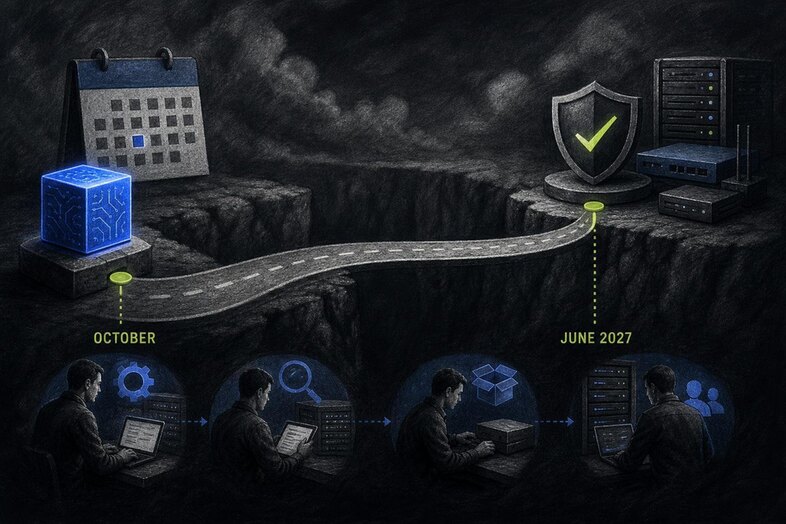
Eclypsium described a case where an upstream component update was available in October, but projected fixes for some products extended to June 2027. Downstream vendors may need to validate an update across hardware revisions, check that it does not disrupt management functions and prepare firmware packages for supported devices. Customers then have to schedule their own installation and validation.
The June 2027 target applied to some products in the reported case, not every vendor or device. It shows why the date a flaw is disclosed and the date a customer can deploy a fix may differ substantially.
For security teams, the report recommends tracking exposure separately from fix availability. Organisations can reconcile duplicate advisories, identify affected equipment and use CISA’s Known Exploited Vulnerabilities catalogue as one input when prioritising work. If no update is ready, teams can document exposure, monitor vendor guidance and reassess as information changes. The report’s example places the projected wait for fixes on some products at June 2027, despite an upstream component update being available in October.