
AFRL Exercises $10.9M Option for Ursa Major’s Draper Hypersonic Engine
 Rendy
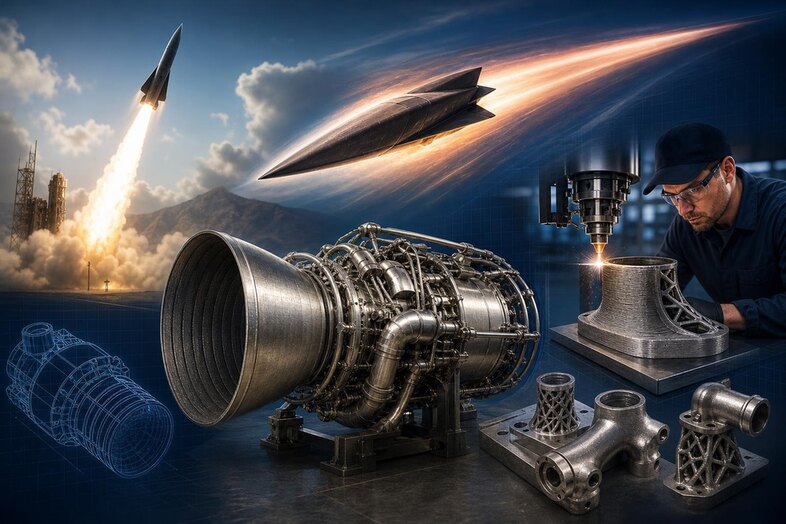
The Air Force Research Laboratory (AFRL) has exercised a $10.9 million option on Ursa Major’s contract to continue developing the Draper engine, following successful flights of the Affordable Rapid Missile Demonstrator under the contract.
Draper is a storable liquid rocket engine designed for hypersonic applications. Ursa Major says it combines additive manufacturing (AM), adaptable designs and flexible production methods in its work on propulsion and other hardware. The source does not specify which engine components are additively manufactured or give production volumes, performance figures or a timetable for Draper’s next development stage.
What the option means for Draper
The exercised option extends the contract work, but the available details do not state the contract’s total value or identify new test milestones. The demonstrator’s successful flights took place under the contract before AFRL exercised the option. Ursa Major has also flown Draper with AFRL as a storable, tactical engine, according to the company information reported in the source.
Ursa Major President Jason Meredith described the award as a continuation of the company’s hypersonics work with AFRL and the US Air Force. He said it would move the programme closer to putting capability in the hands of warfighters. That is the company’s stated view; the announcement provides no additional deployment date or operational-readiness assessment.
The contract update concerns propulsion development and flight demonstration, rather than a reported production order. It does not establish that Draper has entered serial manufacture or that the engine has been deployed operationally.
Ursa Major’s other propulsion programmes
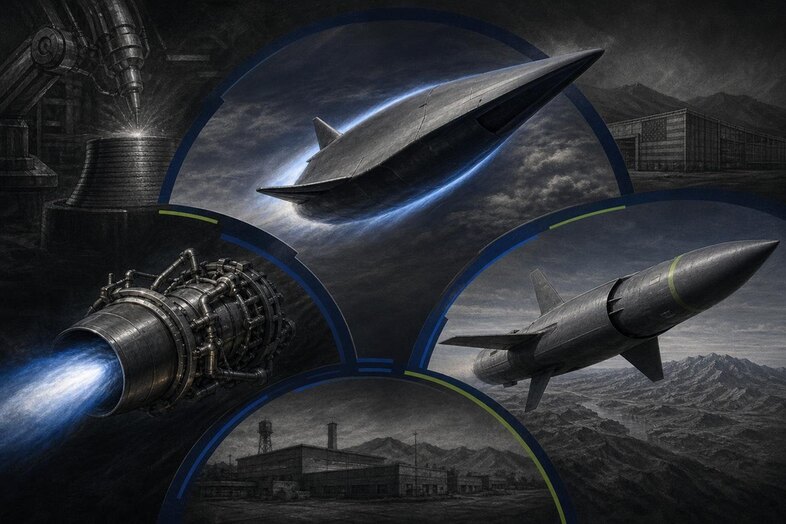
Draper sits alongside two other systems in Ursa Major’s hypersonics portfolio. Its Hadley liquid rocket engine powers the Department of War’s hypersonic test bed, while the HAVOC Missile System is described as a complete munition for hypersonic and long-range precision-strike missions. Ursa Major reports more than a dozen flights across its hypersonic systems, without breaking down that total by programme.
The company, founded in 2015, supplies hypersonic and long-range munitions, solid rocket motors and space mobility systems to the United States and its allies. It is based in Berthoud, Colorado, and also operates a manufacturing site in Youngstown, Ohio. Its stated production approach brings AM together with adaptable product designs and flexible manufacturing methods, although the source gives no comparative cost or output data.
Flight work across other AM propulsion programmes
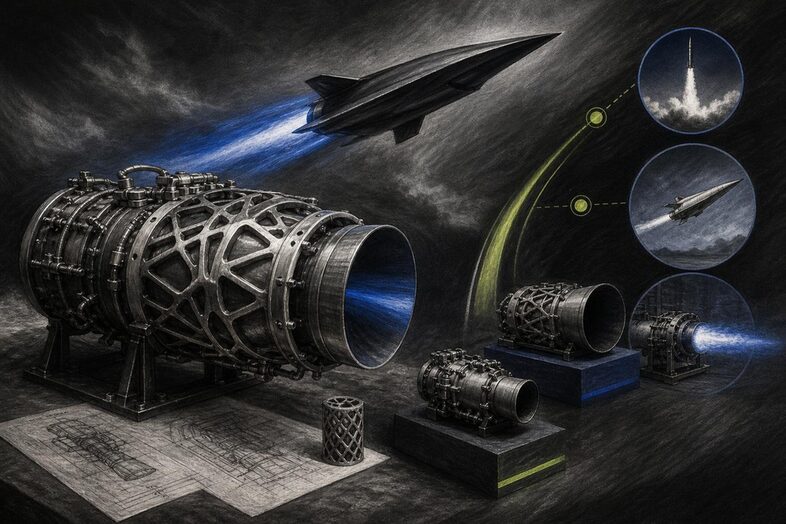
Other companies are also developing additively manufactured propulsion systems under US military contracts, but their programmes are at different stages. Beehive Industries received a $29.7 million Air Force contract covering flight testing, vehicle integration and qualification of its 200 lbf Frenzy 8 engine for uncrewed aerial defence systems. Options under that contract cover further testing and a flight demonstration of the 100 lbf Frenzy 6.
Firehawk Aerospace, meanwhile, flew its 3D-printed hybrid Firehawk Analog above 18,000 feet and beyond the speed of sound in 2025. The company described it as the first flight in a planned series under a Phase III Small Business Innovation Research contract with the Army Applications Laboratory. Those programmes differ in engine type, customer and test stage, so their reported figures do not provide a direct performance comparison with Draper.
For Draper, the confirmed change is the continuation of development funding after demonstrator flights. The exercised option is valued at $10.9 million.