
Florida Man Sentenced to 47 Months for AI-Assisted $260,000 Crypto Scam
 Rendy

David Anthony Sanchez was sentenced to 47 months in federal prison for impersonating streamer N3ON with fake online accounts and an AI-generated voice recording to obtain about $260,000 in cryptocurrency from a meme coin project’s organisers.
The 36-year-old, from Port St. Lucie, Florida, pleaded guilty to money laundering and aggravated identity theft. US District Judge Melissa Damian imposed the sentence, and Sanchez was also ordered to pay restitution to his victims, according to the US Attorney’s Office for the Southern District of Florida.
Fake accounts and a cloned voice
Court records show that Sanchez created online accounts designed to look as if they belonged to N3ON. He contacted the project’s organisers while claiming to be both the streamer and his representative, prosecutors said.
Sanchez signed agreements using N3ON’s identity and sent an AI-generated recording that mimicked the streamer’s voice. The recording falsely confirmed that N3ON would endorse, promote and participate in the project. Organisers who believed the arrangement was genuine transferred about $260,000 in cryptocurrency to accounts controlled by Sanchez.
The project was not named in the press release. The source also does not specify which cryptocurrencies the organisers transferred, so the loss is reported as a dollar estimate rather than as a token amount.
After receiving the funds, Sanchez converted much of the cryptocurrency into US dollars through transactions intended to conceal the money’s origin and ownership, prosecutors said. He then spent the money on himself. The laundering conduct formed part of the case to which he pleaded guilty.
Acting US Attorney Yara Lorenzo Klukas said Sanchez used artificial intelligence to exploit victims’ trust and take their money. The case shows how a fabricated voice recording can reinforce an impersonation claim during negotiations over a crypto project. In this instance, the recording accompanied fake accounts and agreements signed in N3ON’s name.
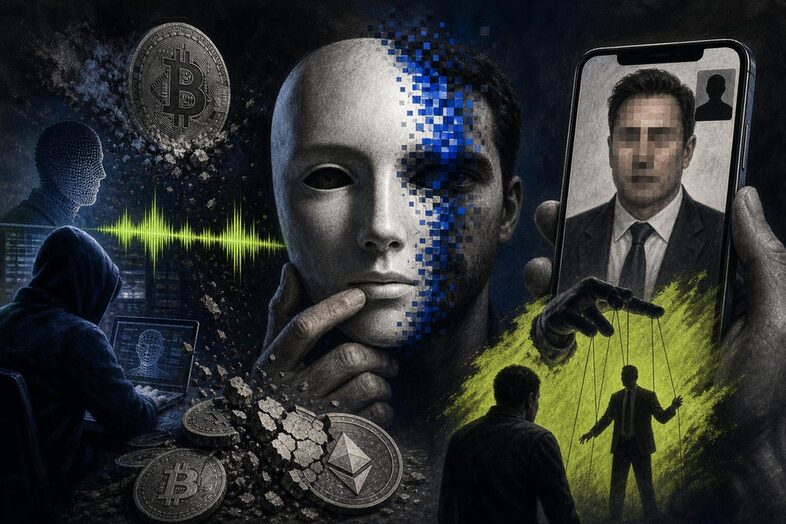
Broader figures cited on AI-enabled fraud
The case comes amid reported growth in impersonation scams involving cryptocurrency. Blockchain analytics firm Chainalysis estimated that impersonation scams increased by more than 1,400% year on year in 2025, with AI tools contributing to the rise. It also estimated that crypto scam losses reached a record $17 billion that year.
Those figures are industry estimates and describe a broader trend, rather than losses tied to Sanchez’s case. They do not establish that AI alone caused the increase. In Sanchez’s prosecution, prosecutors described the AI-generated voice as one element of a scheme that also involved false online identities and agreements.
A separate report from crypto exchange Bitget said AI deepfakes of government officials, billionaires and celebrities accounted for 40% of high-value crypto frauds in 2024. The source does not provide a definition of “high-value” or further details about the report’s methodology.
The US Justice Department also said earlier in November that North Korean hackers had stolen more than $400 million in cryptocurrency over 18 months through a scheme it calls “FaceStealer”. That operation used recorded webcam footage and deepfake videos to impersonate trusted contacts during video calls. The same techniques have been used to target crypto workers, according to the source. FaceStealer is a separate case and is not connected in the source to Sanchez or the N3ON impersonation.

Proposed penalties remain in committee
Legislation addressing AI-assisted fraud has not advanced beyond the House Judiciary Committee, according to the source. The AI Fraud Deterrence Act was introduced in November 2025 by Representatives Ted Lieu and Neal Dunn. It would increase penalties for fraud assisted by artificial intelligence.
Under the proposal, AI-assisted money laundering could carry fines of up to $1 million or three times the value of the transaction, as well as a prison sentence of up to 20 years. Those penalties are part of a bill, not the sentence imposed on Sanchez: he received 47 months in prison after pleading guilty to money laundering and aggravated identity theft.
The outcome in Sanchez’s case is therefore a completed federal sentence, while the proposed legislation remains at committee stage. He was ordered to pay restitution, and the reported loss to the meme coin project’s organisers was approximately $260,000.